"The permit is tied to the tax parcel identification number, not the property owner." That line is printed near the top of the redesigned Change of Ownership Application from the Lake Lanier Project Management Office. A few lines earlier the form says that "when private property changes ownership, the existing Shoreline Use Permit expires."
For most purchases, the important legal facts are settled before anyone signs at the closing table. On Lake Lanier, the dock's permit is the exception. A complete application from the new owner has to include the recorded deed, which exists only after the sale closes, and the U.S. Army Corps of Engineers changed the electrical paperwork for that application this fall.
A complete application needs the recorded deed
The 2004 Lake Lanier Shoreline Management Plan is direct about this. Section 15.1 says permits "are non-transferable. They become null and void upon sale or transfer of the property associated with the permitted facilities," and new owners "must notify the Operations Manager's office of their purchase and make application for a new permit."
The first document the Corps asks for decides the timing. Its new form requires "a complete, final copy of your recorded property deed," with a county recording stamp, a notary stamp and signature, the grantor's signature, and the full legal description, which usually appears as "Exhibit A." The form also says, "We cannot accept closing statements or security deeds." Because a closing statement won't satisfy the Corps, a complete package can't come together until the county has recorded the deed in the new owner's name.
After that, the Corps' Permit Program page estimates "approximately 6 to 8 weeks" to evaluate and process an application once the package is complete. Here's how that plays out for a mid-November closing. If the recorded deed and a complete package reach the Corps the following week, six to eight weeks puts the decision somewhere between New Year's Day and mid-January. That window opens right on the date one version of the new electrical rule says it takes effect.
What goes in the package
The form asks for all the documents together and warns that "missing documents may delay review." Its checklist:
- Recorded property deed, with every stamp and signature listed above.
- Current survey or plat showing property lines and measurements, existing structures, and the lot number or address. The form says that "in most cases we cannot accept subdivision plats, county GIS maps, or satellite images, including Google Maps images."
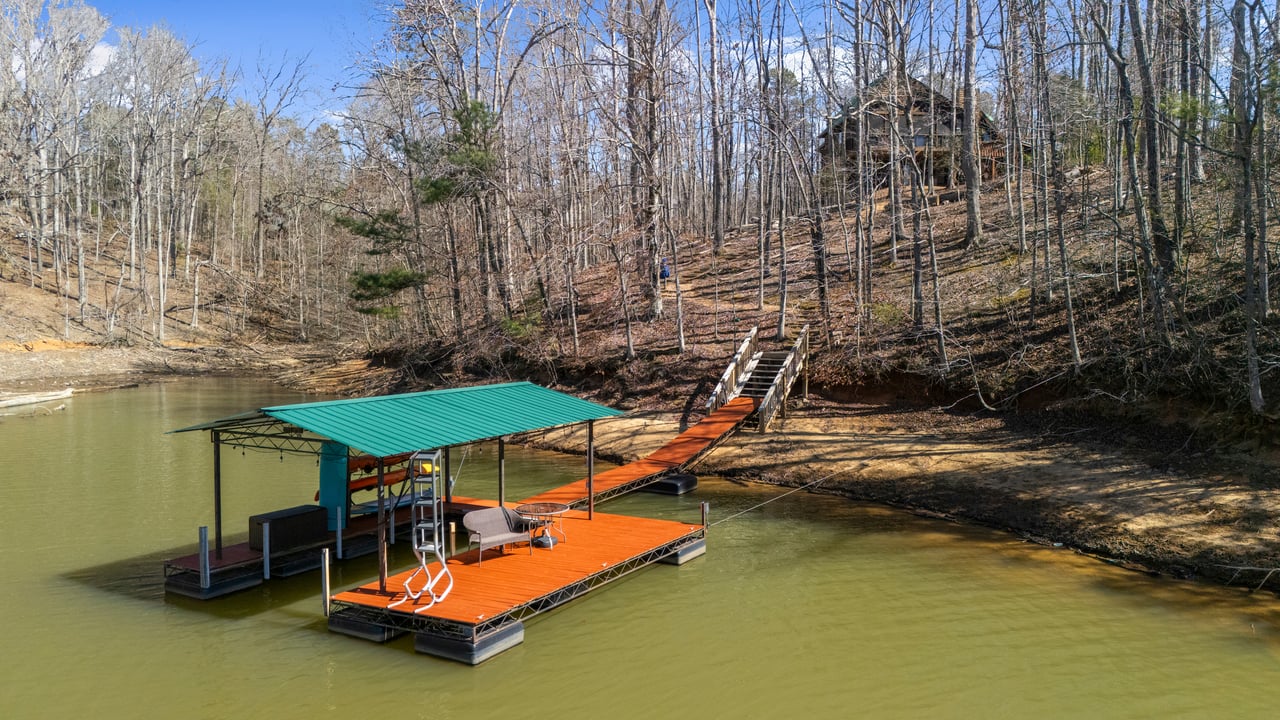
- Existing dock drawing, drawn to scale by hand or on a computer. It covers overall dock length and width, boat slip dimensions, walkway widths, gangway dimensions, and roof dimensions and overhang if the dock has a roof. "Photos cannot replace the drawing."
- Site drawing showing the Corps property line, the private property lines, the shoreline bank, the path from the lot to the dock, neighboring docks, and the dock's authorized location.
- Proposed dock drawing, needed only if the new owner is asking for changes or a new dock, along with a written request.
Item four carries the most consequential line on the form. Next to "Authorized location of your dock," the Corps adds, "this may be different from where the dock is currently located." The permit is tied to a spot on the shoreline as well as to a structure. If a dock has drifted, been moved, or grown since its last permit, the change-of-ownership filing is where that difference shows up.
Packages can go by email to [email protected], by mail, or in person at 1050 Buford Dam Road in Buford. Office hours are Monday through Friday, 8 a.m. to 3:30 p.m.
The electrical letter replaced Exhibit C, and the Corps gives two dates for it
For years, Lake Lanier permit holders certified their dock wiring on a Corps form called Exhibit C. On Sept. 21, 2026, the Mobile District announced in a press release that "beginning Oct. 1, 2026, Exhibit C will no longer be used." In its place, permit holders submit "a letter from a state-licensed electrical contractor certifying that the electrical service complies with current National Electrical Code requirements." According to the release, Exhibit C comes out of renewal, modification, and change-of-ownership packages, and packages mailed before Oct. 1 will still be processed with the old form.
The approved administrative change to Section 15.3.10, which the Corps posted as its own document, has a different date at the top of the new language: "Effective January 1, 2027." The two dates disagree, and none of the Corps materials we found explains why. For a sale closing between now and early January, the question of which date applies is best put to the Lake Lanier office directly. The release lists Chief Ranger Josh Davis as the contact, at 770-904-3260.
Here's what the old and new language say about dock power:
| 2004 SMP wording | Approved change, marked effective Jan. 1, 2027 | |
|---|---|---|
| Standard | Lanier requirements adopted Nov. 27, 1985, described as one that "slightly exceeds the National Electric Code" | "The most recent version of the National Electric Code," with private docks meeting Article 555 |
| Proof | Recertification "at each permit renewal, change of ownership" or when an inspection finds a problem, using Exhibit 3, also called Exhibit C | Original letter from a state-licensed electrical contractor at each change of ownership, electrical modification, or permit renewal |
| Age of proof | Not specified | "No more than 3 months old" |
| Service pole | Not specified | 6-by-6 pressure-treated wood, no more than 8 feet above ground, one per dock, unless NEC requires otherwise |
| Line route | Buried, with GFI protection | Follows the route of the access path |
The letter has to include the Corps permit or license number, a list of the electrical components inspected, the contractor's printed name and signature, a Georgia electrical contractor's license number, and the inspection date. The Change of Ownership Application's own "What to Submit" list doesn't mention the letter, so the document requirement and the checklist don't currently match.
The Corps describes the change as paperwork only. "The electrical service requirements are not changing," the release says. "Compliance with the National Electrical Code has always been required." The one timing detail that clearly matters at a sale is the three-month window. An inspection done long before a listing went live won't produce a letter that's still valid when the buyer files after closing.
What Article 555 covers on a private dock
Article 555 is the section of the National Electrical Code that covers "fixed or floating piers, wharfs, docking facilities, marinas, and boatyards," according to Mike Holt's overview of the 2023 NEC. His summary lists ground-fault protection of no more than 30 mA on individual shore-power receptacles and no more than 100 mA at the feeder. It also calls for a readily accessible disconnect within 30 inches of each shore-power receptacle and a permanent safety sign warning of shock hazards, visible from every approach.
The Georgia Department of Community Affairs lists the 2023 NEC with Georgia amendments as the state's current mandatory electrical code. The Corps language says "most recent version," and the materials we found don't say whether that means Georgia's adopted edition. IAEI Magazine names electric shock drowning as the hazard these marine safeguards address, and it notes that the risk applies to small residential docks too.
What the ranger checks
After the Corps receives a complete package, the form says, "an Area Ranger will review the documents and inspect the shoreline area," and the inspection will "verify existing shoreline facilities and determine whether the property adheres to the 2004 Shoreline Management Plan." Section 15.4 of the plan requires that inspection at every change of ownership. The inspector reports deficiencies, and the Operations Manager decides whether the facilities comply.
Some older docks carry features permitted under earlier policy. Section 15.7 covers those "grandfathered" items:
Existing permits will continue to be reissued for these items as long as they are maintained in a usable and safe condition, not occasion a threat to life or property, and the permitee is in substantial compliance with the existing permit conditions. If the permitted facilities do not meet these requirements they must be removed and cannot be replaced.
Electrical service doesn't get that protection. The 2004 wording says that regardless of "age, condition or Grandfathered provision," all service needs GFI protection and buried lines, and must be recertified at every change of ownership. The new form adds that written approval is required before "installing or changing any dock, path, steps, utilities, shoreline facilities, or before cutting trees or vegetation."
FAQ
What does a change-of-ownership permit cost right now? The Corps' Permit Program page lists an administrative fee category for "New Permit / Change of Ownership." It doesn't publish a dollar amount and notes that rates are subject to change. The current figure has to come from the Lake Lanier office.
Is there a deadline to apply after closing? Neither Section 15.1 nor the new form gives one. Both say the old permit ends at the sale and that the new owner applies.
Can the dock be used while the application is pending? The Corps documents we reviewed don't address it. The form says a Shoreline Use Permit is required before "building, maintaining, changing, or adding facilities."
Who pays if the ranger finds a problem? The Corps materials assign compliance to the permit holder. They don't say how repair costs are split between buyer and seller.
Why are applications delayed? The form names five common causes: a missing recorded deed with legal description, survey or plat, measured dock drawing, site drawing showing the Corps line and shoreline access, or contact and property access information.
When you're under contract on a lake home, it helps to know what the dock's permit file shows and how the electrical letter's three-month window lines up with your closing date before you're at the table. Teresa Smith and the Living on Lake Lanier team work through Corps permits, dock drawings, and shoreline questions with buyers and sellers, and we'd love to help you plan yours. Let's Connect.
This article is general information, not legal, tax or financial advice. Consult a qualified professional about your situation.